

Choosing an air filter isn’t as simple as picking the cheapest one on the shelf. It is a delicate balancing act between Indoor Air Quality (IAQ) and HVAC System Longevity. The key to mastering this balance lies in one acronym: MERV. In this comprehensive guide to MERV ratings, we will break down everything you need to know about the number, how they affect your health and your wallet, and how to choose the perfect filter for your specific living situation.
What is a MERV Rating?
MERV stands for Minimum Efficiency Reporting Value. Created by the American Society of Heating, Refrigerating and Air-Conditioning Engineers (ASHRAE) in 1987, this rating system was designed to provide a universal standard for comparing the effectiveness of air filters.
How the Rating Works
The MERV scale ranges from 1 to 20. The higher the number, the more efficient the filter is at trapping smaller particles.
To understand the scale, we have to look at microns. A micron is one-millionth of a meter. For context, a human hair is about 70 microns wide. A MERV 1 filter might only catch particles larger than 10 microns (like carpet fibers), while a MERV 16 filter can trap particles as small as 0.3 microns (like bacteria and tobacco smoke).
The Static Pressure Trade-off
It is a common mistake to assume that a MERV 20 filter is “the best” because it catches the most debris. However, air filters work like a sieve. The smaller the holes in the sieve, the harder it is to push air through them.
In the HVAC world, this resistance is called static pressure. If you put a high-MERV filter in a system that wasn’t designed for it, your blower motor has to work twice as hard to pull air through the dense material. This leads to:
- Higher monthly energy bills.
- Short-cycling (the system turning on and off too frequently).
- A frozen evaporator coil in the summer.
- Premature motor failure.
MERV Comparison Chart
To help you visualize which rating fits your needs, refer to the table below.
MERV Rating 1-4
- pollen, dust mites, lint, carpet fibers
- Basic furnace Protection, not for air quality
MERV Rating 5-8
- Mold spores, hair spray, cement dust
- standard residential homes, typically the baseline
MERV Rating 9-12
- Lead dust, auto emissions, humidifier dust
- Pet owners, mild allergy sufferers.
MERV Rating 13-16
- Bacteria, smoke, sneeze droplets
- Severe allergies, asthma, hospitals
MERV Rating 17-20
- Viruses, carbon dust, ultra-fine particles
- Clean rooms, surgery centers, not used in homes.
Finding the “Sweet Spot” for Your Home
Every home has different needs. A bachelor living in a minimalist condo in a clean suburb has very different air filtration needs than a family of five with three golden retrievers living near a highway.
The Standard Choice: MERV 8
For the average homeowner, a MERV 8 pleated filter is the industry recommendation. It provides enough filtration to protect your HVAC equipment from dust buildup while catching common household allergens like pollen and dust mites. It is affordable and offers low enough resistance that almost any modern HVAC system can handle it without strain.
The “Pet & Allergy” Upgrade: MERV 11
If you have shedding pets or suffer from seasonal hay fever, upgrading to a MERV 11 is usually the best move. These filters are significantly better at capturing pet dander and fine dust. You will likely notice less dust settling on your furniture when you make this switch.
The Superior IAQ Choice: MERV 13
Since the COVID-19 pandemic, MERV 13 filters have become highly popular for residential use. They are efficient enough to trap virus-carrying droplets and smoke. If you live in an area prone to wildfires or have a family member with asthma, MERV 13 is your best defense.
Note: Before using MERV 13, ensure your HVAC system’s manual states it can handle the increased static pressure.
Types of Air Filters: Materials Matter
The MERV rating tells you how it performs, but the material tells you how it lives.
Fiberglass Filters
These are the blue or green “see-through” filters you find at the dollar store. They usually have a MERV rating of 1 to 4. Their only purpose is to keep large “bunnies” of hair out of your furnace. They do almost nothing for your lung health.
Pleated Filters
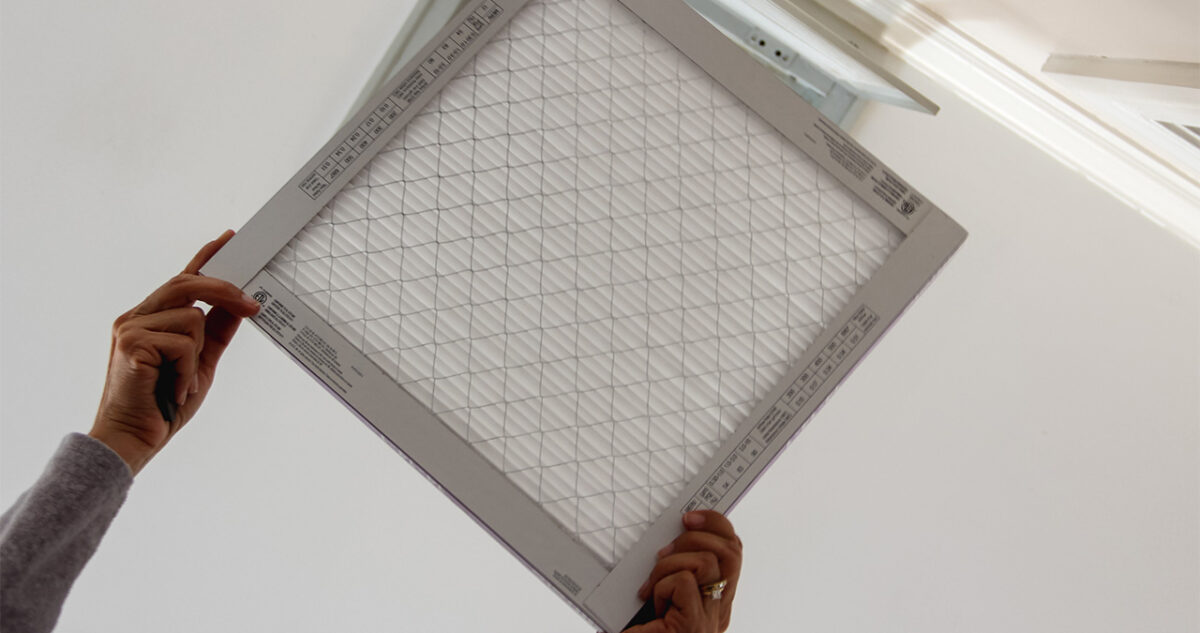
Most high-quality residential filters are pleated. The “V” shapes in the material increase the surface area of the filter. More surface area means the filter can trap more dust without immediately clogging and restricting airflow.
Electrostatic Filters
These use specialized fibers that generate a static charge as air passes through them. This charge acts like a magnet for dust and smoke. They are available in both disposable and washable versions.
- A Word of Caution on Washable Filters: While they seem eco-friendly, they often have lower MERV ratings and must be completely dry before being re-installed. If you put a damp filter back in your furnace, you are inviting mold to grow inside your ductwork.
High-Efficiency Particulate Air (HEPA)
True HEPA filters are the gold standard, trapping 99.97% of particles down to 0.3 microns. However, standard residential HVAC systems cannot use HEPA filters. They are too thick and would completely “choke” the airflow of a standard furnace. If you want HEPA-level filtration, you should invest in a standalone air purifier or a whole-home HEPA bypass system.
Why Changing Your Filter is Non-Negotiable
You could buy the most expensive MERV 16 filter on the market, but if you don’t change it, it becomes a liability.
The “Dirty Filter” Domino Effect
1. Restricted Airflow: As the filter fills up, the gaps for air to pass through disappear.
2. Increased Energy Consumption: Your system runs longer to reach the temperature set on the thermostat.
3. Heat Exchanger Stress: In the winter, a lack of airflow can cause your furnace’s heat exchanger to overheat and crack—a lethal (carbon monoxide) and expensive problem.
4. Poor Air Quality: Eventually, a clogged filter can no longer hold debris, and “blow-by” occurs, pushing all that trapped dust back into your living rooms.
How Often Should You Change It?
Changing your air filter depends on your home and environment. For more in-depth information, check out our article “How Often Should I Change My Furnace Filter?”
- Single Occupant: Every 6–12 months.
- Average Suburban Home: Every 90 days.
- Home with Pets: Every 60 days.
- Multiple Pets/Allergy Sufferers: Every 30–45 days.
Common Myths & FAQs
Myth: “The thicker the filter, the better the MERV rating.”
Not necessarily. While 4-inch or 5-inch “media filters” often have higher MERV ratings, you can find MERV 13 ratings in a standard 1-inch filter. However, thicker filters (4-5 inches) are actually better for your HVAC system because they have more surface area, meaning they provide high filtration with less air resistance than a thin 1-inch filter of the same rating.
FAQ: Can I use a MERV 13 in an older furnace?
If your furnace is more than 15–20 years old, it likely has a permanent split capacitor (PSC) motor. These are less efficient and more sensitive to pressure than modern ECM (Electronically Commutated Motors). Using a MERV 13 in an old unit might cause the limit switch to trip. Stick to MERV 8 unless you’ve had a professional check your system’s static pressure.
FAQ: Is a “Washable” filter worth it?
Usually, no. While you save money on replacements, the time spent cleaning and drying them is significant. Furthermore, they rarely achieve the high MERV ratings needed for modern air quality standards.
Professional Tips for Buying Air Filters
Before you click “Buy” on that 12-pack of filters, keep these three tips in mind:
- Check the Actual Size: Filters have a “Nominal Size” (the big numbers printed on the side like 20x25x1) and an “Actual Size” (usually 1/4 to 1/2 inch smaller). Always buy based on the nominal size, but if you have a weirdly sized intake, you may need to order custom sizes online.
- Arrow Direction Matters: Every filter has a small arrow printed on the frame. This arrow must point toward the furnace/blower. Installing it backward reduces the filter’s efficiency and can cause the filter to collapse under pressure.
- Buy in Bulk: Air filters don’t expire. Buying a year’s supply (4–6 filters) at once usually drops the price per unit by 20–30%.
Breathe Easier with the Right Choice
Choosing the best air filter isn’t about finding the most powerful one; it’s about finding the one that matches your lifestyle and your HVAC system’s capabilities.
For the vast majority of people, MERV 8 is the baseline, and MERV 11 is the sweet spot. By staying consistent with your filter changes, you are extending the life of your home’s most expensive appliance. Next time you stand in the hardware store aisle, don’t just grab the cheapest option. Look for the MERV label, consider your pets and your allergies, and make a choice that lets both you and your furnace breathe a little easier. For more information on best practices for your equipment, contact us today.