

Imagine waking up on a frosty Iowa morning and walking comfortable across your warm kitchen instead of tiptoeing across the frigid tile floor. Add an extra level of comfort to your new home with a radiant floor heating system. Aspen Aire installs both electric and hydronic floor heating for home construction projects in Des Moines and central Iowa.
Call today for a free quote for radiant heat installation or repairs.

Benefits of Radiant Floor Heating
- Even heating with no hot spots
- No uncomfortable, cold floors
- Feel more comfortable at a lower temperature
- Heat different zones or rooms separately
- Less heat loss than from forced air heating systems
- Saves on energy bills
- As much as 30% more efficient than forced-air heat
- Low-maintenance
- No dust and allergens blowing in the air
Professional Radiant Floor Heating Contractors in Des Moines
Aspen Aire is a trusted, experienced radiant heating contractor in Polk County and a licensed HVAC company serving the Des Moines area since 2006.. Whether you choose electric radiant heat or hydronic radiant floor heating, we’ll design and install a system that will help you stay comfortable all winter.
If you’re building a new home, contact us today for a free, customized estimate for a radiant floor heating system.
What Is A Radiant Floor Heating System?
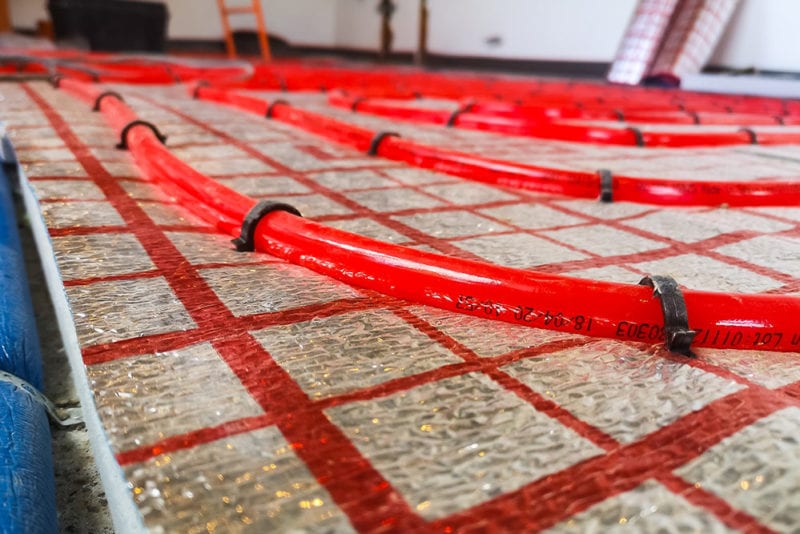
A radiant floor heating system uses a heat source underneath the flooring to warm its surface as well as the air and objects above it. There are two types of in-floor heat: electric and hydronic.
Electric Floor Heating – With electric radiant floors, electric wiring is woven into a mat that’s installed under the flooring. Electric radiant floor heating can be turned on and off but the system takes 30 minutes to an hour to heat up. The cost of electricity should be considered, as it can offset some of the energy savings of in-floor heating.
Hydronic Floor Heating – With hydronic radiant floors, plastic tubing is installed below the flooring. Heated water from a water heater or boiler circulates through the tubing to maintain the temperature. Hydronic heat systems are low-maintenance, energy efficient and last for years.
In-floor radiant heating systems can be used in a home or a garage. The heating elements are commonly installed on a concrete slab under tile or some types of wood flooring. Carpet is also an option, although floor coverings can create so much insulation that the heat doesn’t really come through, especially if there’s thick padding under it.
How Does Radiant Floor Heating Work?
An Efficient Alternative to Forced Air
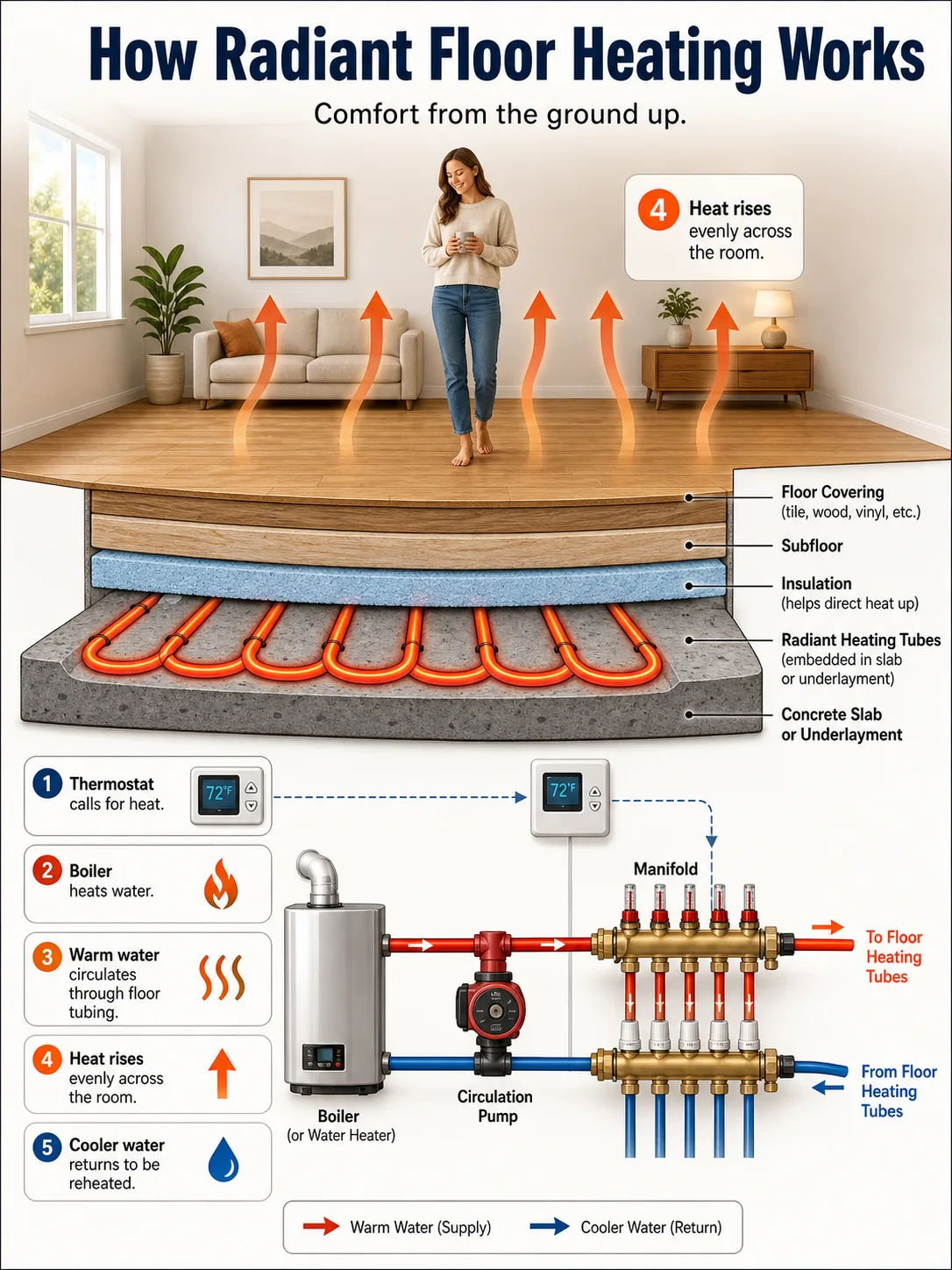
Radiant floor heating functions much like a large-scale, low-temperature radiator positioned right beneath your feet. Unlike traditional heating methods that focus on warming the air, this system utilizes either electric wiring or durable, hot-water-filled plastic tubing (PEX) that “snakes” back and forth under your flooring material.
This layout ensures an even distribution of warmth, maintaining the floor at a consistently comfortable temperature.
The Science of Thermal Radiation
The core mechanism behind this technology is thermal radiation. Waves of energy rise directly from the floor to warm the objects and people within the room. You can think of it like a dark sidewalk radiating heat on a sunny day; the surface absorbs energy and gently releases it back into the environment.
While a traditional radiator might get scalding to the touch, a radiant floor heating system typically reaches a surface temperature of approximately 85°F (29°C). This is specifically calibrated to feel cozy and warm without being hot to the touch. Because the entire floor surface acts as a heat source, the room maintains a uniform “warm all over” feel, naturally keeping the cooler air tucked away near the ceiling where it won’t affect your comfort.
Frequently Asked Questions
Is radiant floor heating more energy efficient than traditional central heating systems?
In general, radiant floor heating is highly energy efficient because there’s no heat loss through the ductwork like with forced air heating systems. The heat comes directly from the source and rises to warm the room from the ground up. The actual energy efficiency of an in-floor radiant heating system depends on the flooring type used and the heating source.
Can radiant floor heating be installed under any type of flooring?
Tile and stone flooring are ideal for radiant heating because they conduct heat well. Most types of flooring will work but they may not be as effective. A professional installer like Aspen Aire can recommend the best flooring type for your home’s floor heating system.
How much does a radiant heating system cost to install?
The installation costs will depend on the size of room it’s being installed in as well as whether it’s a hydronic or electric floor heating system. A hydronic floor heating system usually costs more to install but is cheaper to operate. Electric systems, on the other hand, are less expensive to install but may cost more to operate.
Can radiant floor heating be used in existing homes?
Yes. Radiant floor heating can often be retrofit in existing homes, especially during remodels or when replacing flooring. Request a consultation today!
How long does radiant floor heating last?
Hydronic systems can last 30 to 50 years with proper maintenance, and electric systems typically last around 25 to 30 years.
Request a Quote for Radiant Floor Heating Installation
If you’re building a new home in the Des Moines area and the thought of walking across soothing heated floors on frigid winter mornings is appealing, contact Aspen Aire today for a free, customized estimate for a radiant floor heating system.